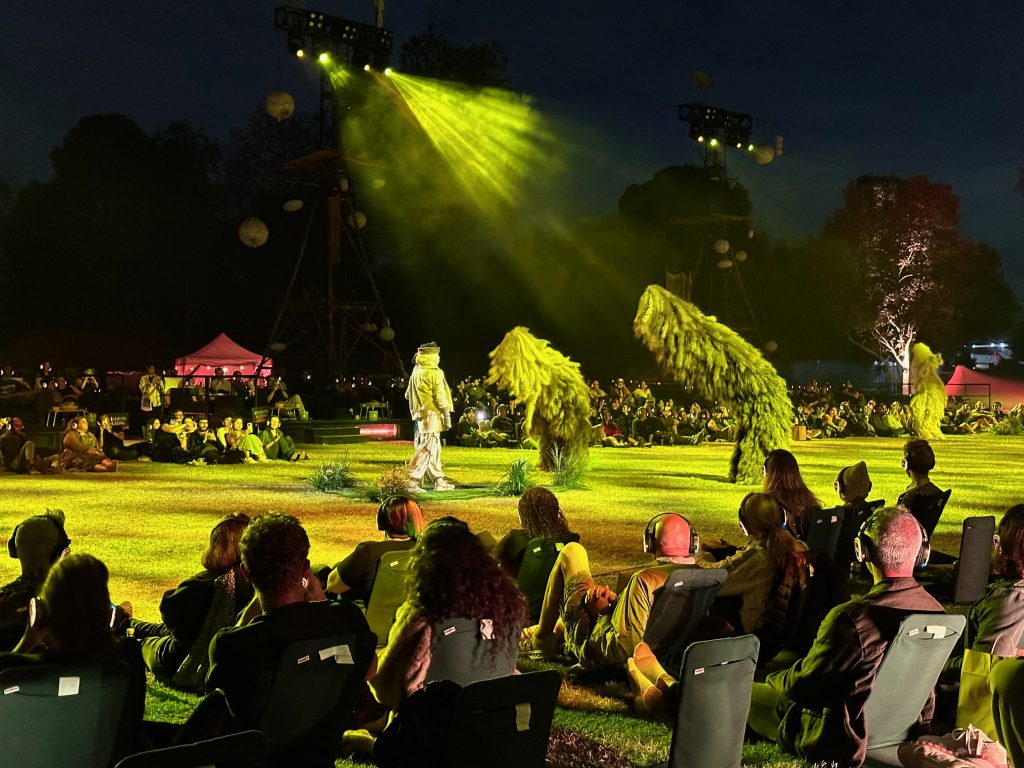
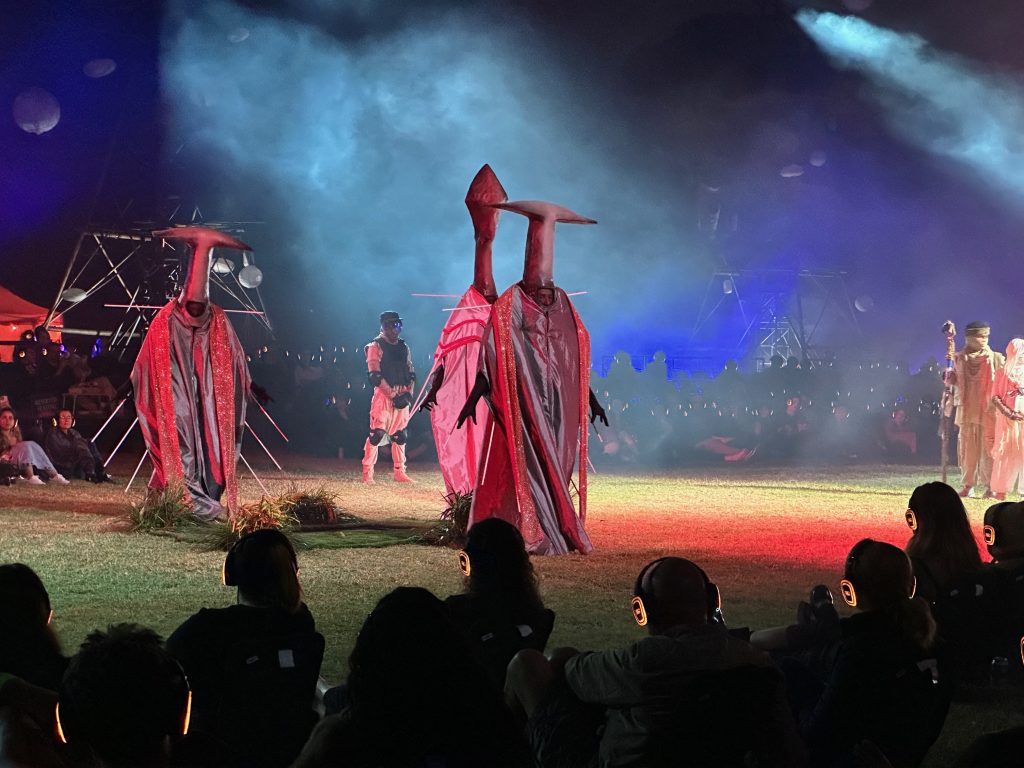
The Cortège bills itself as “a festive funeral for our times.” But what does that mean?
It’s a wordless musical, a silent disco, a live outdoor music video, and a simulated funeral procession. It’s told with dancers, musicians, surreal costumes, lights, drones, and even robots.
Without going too much into spoiler territory as there are still a few show dates remaining, the gist of the story is one of a life tragically cut short, followed by a visit to a mystical realm and a celebration. It’s a tale as old as time adapted to the present day.
This is the latest endeavor from Nonchalance, which as I understand it is now Jeff Hull and whoever he feels like working with these days. Interestingly while his previous projects seemed hidden — often in plain sight — this one has already been covered (with various spoilers, be warned!) by the L.A. Times and Forbes.
I’ll admit that I came all the way to Los Angeles primarily to see this; however my nagging thought leading up to this was “Is Jeff going to try to get us to make tea again?” The answer: no. The tea was already prepared.
My recommendation: Though more spectacle than story, The Cortège isn’t like anything you’ve seen before. It defies an easy description; best to experience it for yourself.
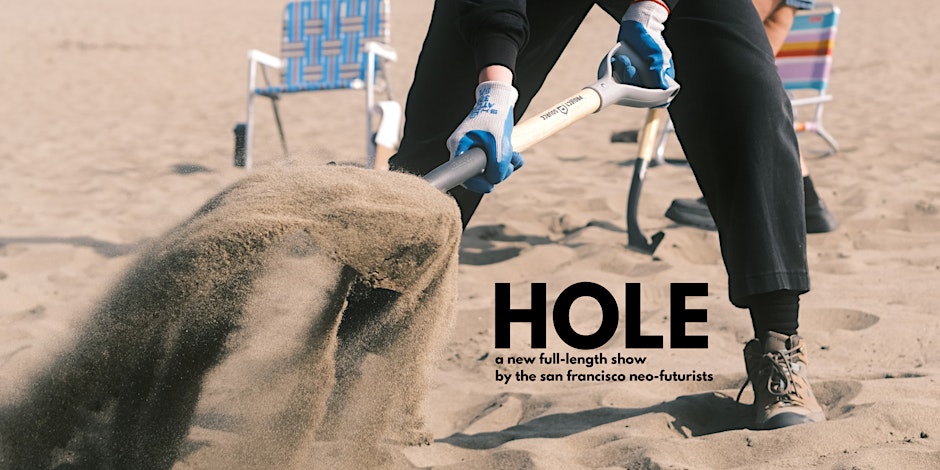
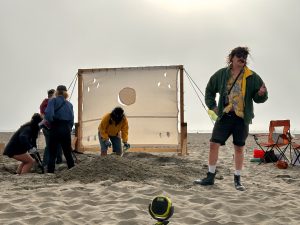
Today I was lucky enough to see one of the few performances of the limited run of HOLE by the San Francisco Neo-Futurists, a local experimental theater group.
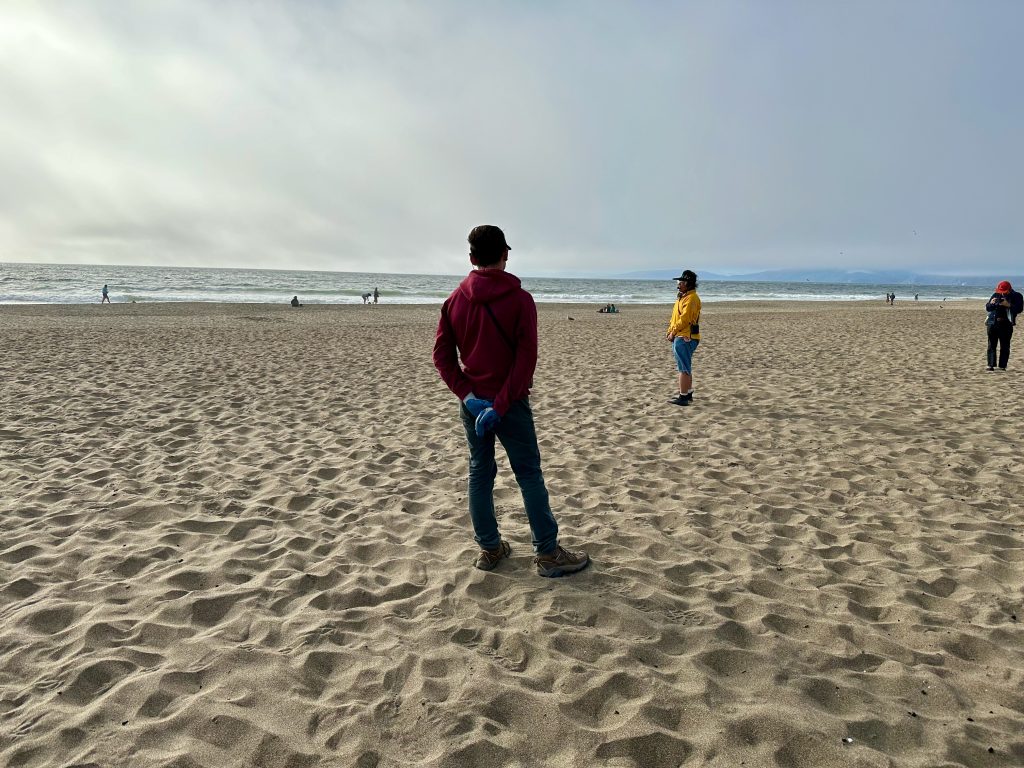
The first step once you have tickets is a small adventure: you’re only provided the exact location a couple days in advance. All I can say is that it’s at a beach in San Francisco and very easy to get to on Muni.
After checking in at a tent on the beach you can sit wherever you like in the area in front of the speakers.
The show starts with four main characters who’ve already decided to dig a hole. Before grabbing their shovels, a clip from Head Like a Hole by Nine Inch Nails starts playing which they dance along with.
(Could that coincidentally serve as foreshadowing for an upcoming blog post? Hmmm…)
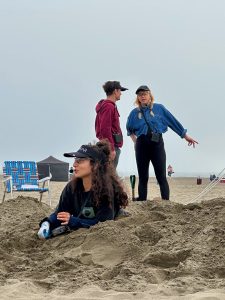
Soon they begin digging an increasing large hole in the sand, pontificating on the nature of the hole as they go about it. We’re introduced to a fifth character as well as a volunteer from the audience, and the entire audience is given an option to follow two actors as they walk down the beach.
I get the feeling there’s a fair amount of improv involved considering the nature of performing at a public beach with notoriously unpredictable weather. It happened to be warm today, but that also made way for chaos — hoards of beachgoers including people with dogs, kite flyers, and several groups using the fire pits.
I’m trying not to spoil too much here but I found it enjoyable, laugh out loud hilarious at times, if relatively short at about 75 minutes. It does get off to a slow start but it evolves into a sillier and faster-paced show as the hole grows.
My recommendation: HOLE is filled (pun intended) with humorous observations, indulgent philosophy, and audience participation elements. Bring sunscreen, a folding beach chair or something else comfortable to sit on, and a bottle of water. Limited snacks and beverages are provided.
My therapist is always telling me I need to take time to relax. No, that’s not the setup for one of those quirky The New Yorker cartoöns, it’s the reality for those of us seeking treatment for insomnia.
So far I’ve found that a quick meditation exercise here and there offers some limited relief. But I was already looking to take it a step further when I came across an intro deal at a local float therapy spa.
I knew I had to give it a shot.
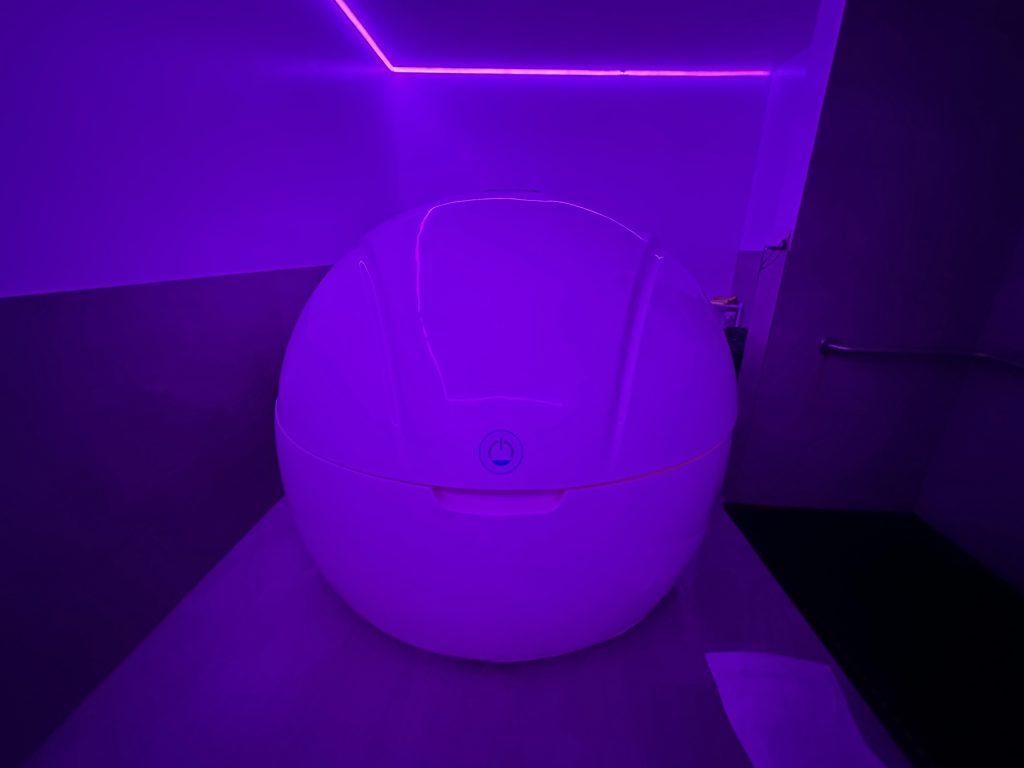
Float tanks — also known as sensory deprivation tanks — are like oversized enclosed bathtubs filled with body temperature filtered salt water. The goal is to relax deeply with as little external stimulation as possible.
The process is similar getting into a hot tub with a quick shower before and after. Since I had a private room I did this all in the nude, but swimwear is an option for those feeling prudish. I’d imagine anyone with long hair would probably want a shower cap or something similar to protect it.
Inside the tank you have to pull the lid closed, which is a bit tricky as you’ll start floating due to the buoyancy of the water the second you step into the thing. As you get situated, relaxing music plays for a couple minutes to get you in the mood.
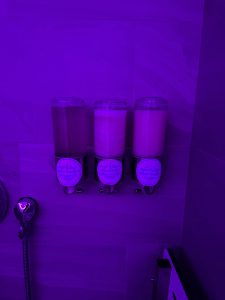
In the tank there’s a couple of floating pillows to try, as well as a spray bottle of fresh water and a washcloth to be used if you get the saltwater in your eyes.
There’s a button to switch the color changing lights inside the pod off and on. In my pod at least it took a bit of pressure to activate, which sent me floating in the opposite direction.
During the hour long session, you’re supposed to try and quiet your mind. The intro video suggested counting backwards from 300. I kept noticing my thoughts intruding and guiding them back to center on the countdown. Not that I made it very far, but it’s not a race.
The term “sensory deprivation” is surprisingly apt; it feels like nothing is under you, and due to the temperature of the water there’s very little sensation of physical contact.
Getting out of the tank was a bit trickier than getting in due to being coated in a thick layer of slippery salt. After closing the lid I popped out the complementary earplugs, took a quick shower, and was good to go.
My first thought afterwards was: had it really been an hour? My watch said so, but the time absolutely flew by. I had the strangest sensation as though I’d somehow just taken a nap without falling asleep.
Would I do it again? At about $75 including the tip I probably would, assuming I got another discount offer. Perhaps that’s still expensive, but if going once and a while can help relieve insomnia it’s worth considering.
Started in 1975 as an offshoot of a “food conspiracy,” San Francisco’s preeminent worker-owned vegetarian grocery store began at a small storefront on 16th Street.
After several moves — the original store is now the home of German beer bar Gestalt — Rainbow acquired their Folsom Street location in the 90’s and has been selling organic foods there ever since.
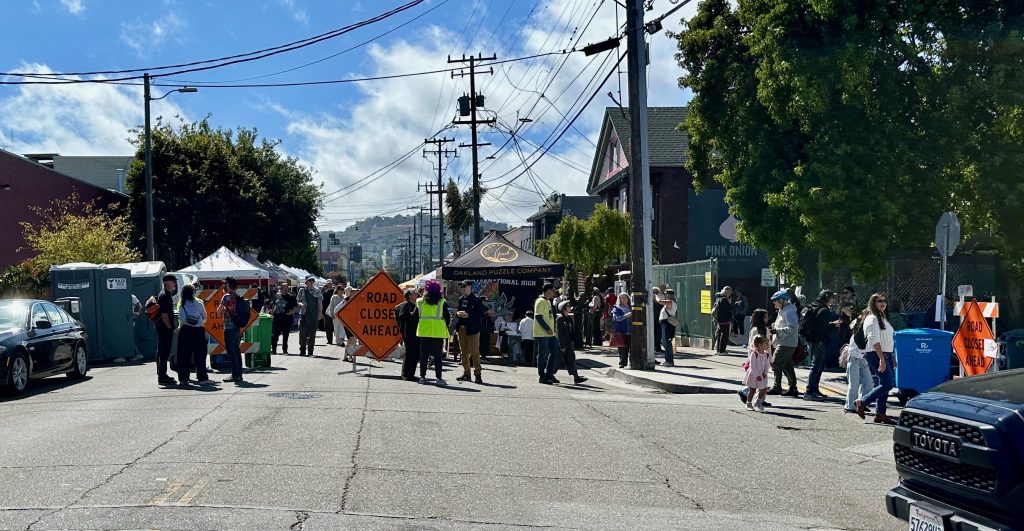
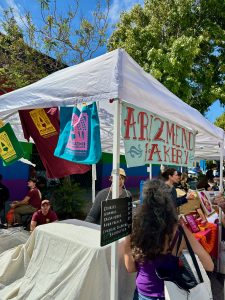
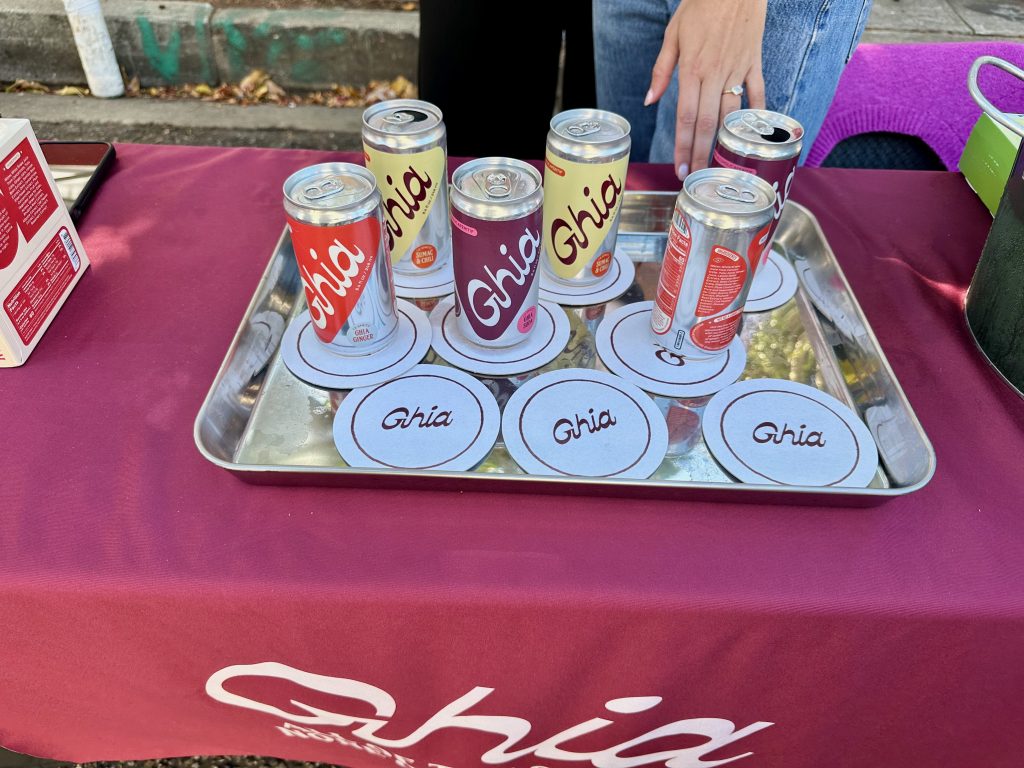
Today, Rainbow Grocery celebrated its 50th anniversary with a block party highlighting like-minded local purveyors of food, music, skin care, and other products and services. There was even a dog rescue charity, which was a big hit with the younger crowd.
While America’s food landscape may be dominated by giant corporations, it’s great to see that worker owned co-ops can still be a viable alternative. Not only that, but one that has a community built around it; a community big enough to wolf down most of the free samples before I made it out there.
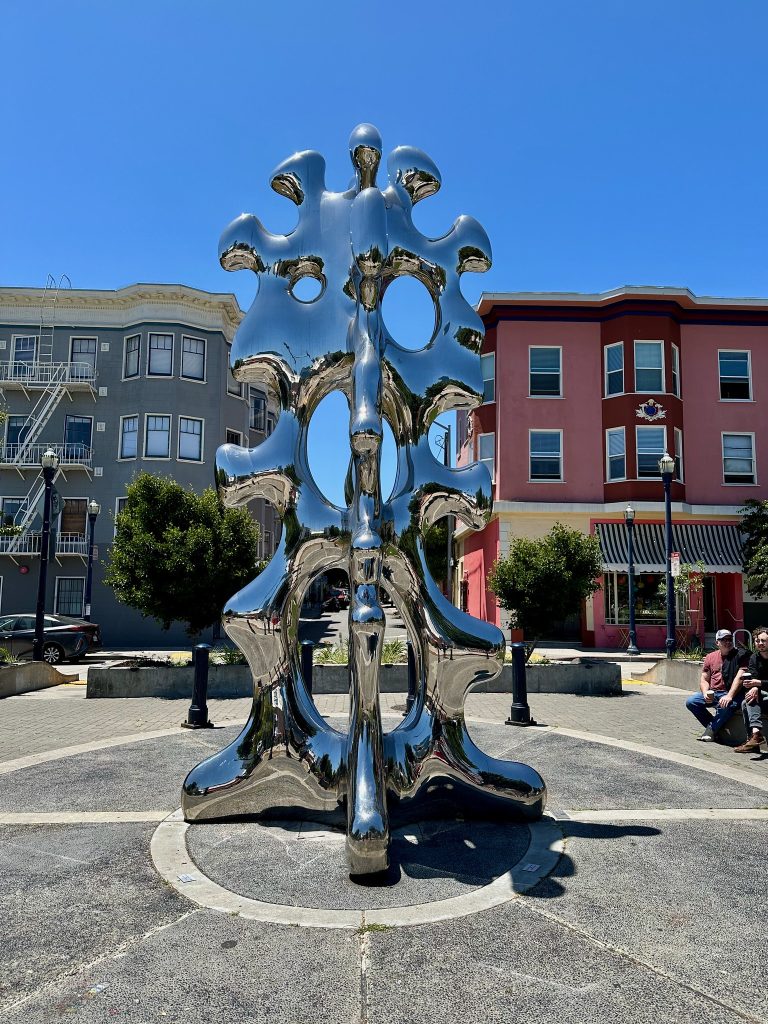
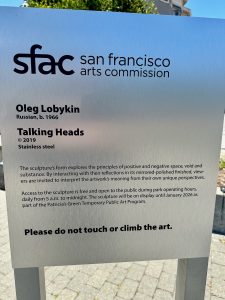
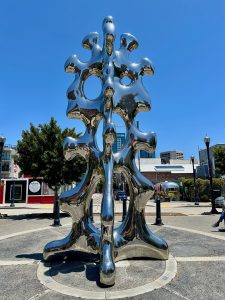
The highly reflective stainless steel form is reminiscent of a drop of mercury hitting a surface, mirroring its surroundings for a brief moment in time. As you, the viewer, reflect on the meaning of the sculpture it’s quite literally reflecting back at you — such is the playful nature of modern art.
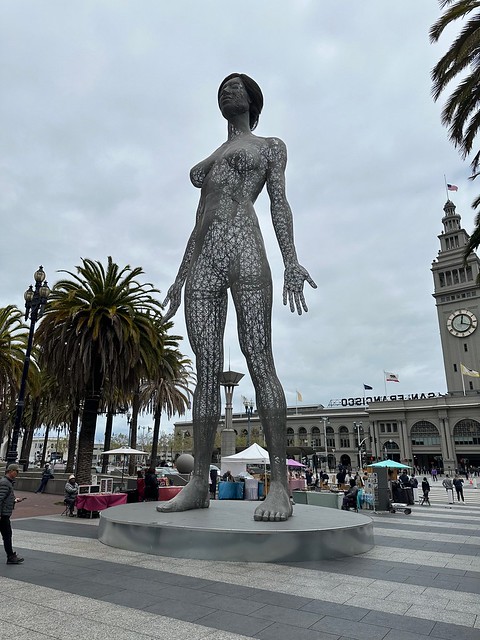
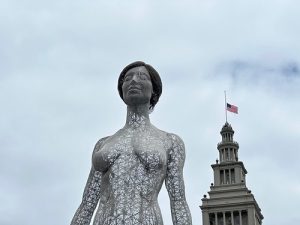
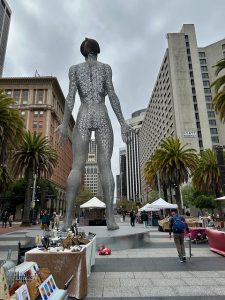
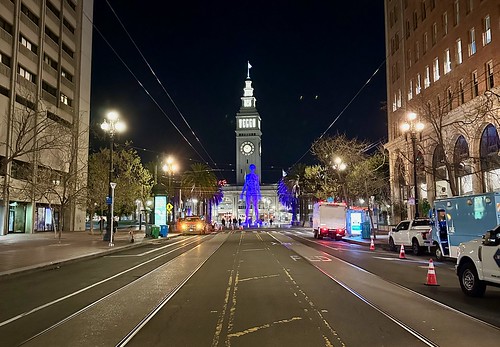
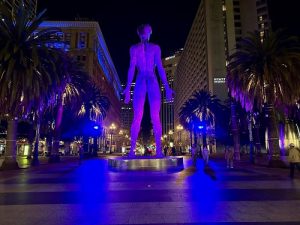
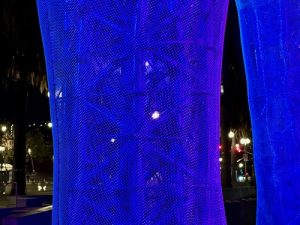
Earlier this month the plaza across the Ferry Building at between Market St. and Embarcadero became the temporary home of R-Evolution by Italian-American artist Marco Cochrane. The metal lattice sculpture depicts a woman standing tall with her shoulders back and her palms facing out. It’s part of Cochrane’s Bliss Project series of sculptures and made its debut at Burning Man in 2015 before going on tour.
When it was first announced the statue would be displayed in San Francisco, it was going to be located on top of Union Square. That didn’t pan out due to concerns about the weight of the statue damaging the square’s granite tiles. So it was moved to the waterfront instead.
The couple of times I was in the area, I noticed dozens of tourists stopping by to take photos of the statue and selfies with it. The local media tells a different story with various controversies, both real and imagined. (Media literacy protip: “controversial” is the most overused weasel word in journalism.)
One of the most ridiculous concerns is that it would block views of the Ferry Building. Not only is the sculpture about a third of the height of the Ferry Building tower, but both are easily dwarfed by the buildings around it. If anything, the existing palm trees on the plaza are tall enough to block views of the sculpture.
Another point I’ve heard come up is that it should have been placed at Patricia’s Green in Hayes Valley. I suspect this idea comes from another temporary sculpture of a woman, Tara Mechani, which was located there six years ago. The difference is scale: R-Evolution is about three times taller than Tara Mechani. While there’s obviously precedent for putting Burning Man art at Patricia’s Green on a temporary basis, it’s a tiny park and I doubt there would be room for the base of the sculpture — let alone any place to attach the external lighting.
Perhaps the best critique of the sculpture I’ve heard so far is summed up in this KQED opinion column:
R-Evolution, in a very old-fashioned way, is not a singular person, but a self-declared symbol of “divine feminine energy” — a giant nude sculpture of a woman made by a man. We should know by now that a depiction of a woman is not inherently feminist.
Well… yeah. Fair enough.
But to me it it seems the critics on both sides are missing the point. As art goes, R-Evolution is bland and uninteresting. There’s nothing about it that rewards multiple viewings or looking at it from different distances and vantage points. It’s more like the type of decoration you’d expect to see outside of a shopping center, not a museum-worthy piece.
Art has to have depth to it, something that evokes a reaction. R-Evolution doesn’t do that; it’s merely something to snap a photo of on your way to grab a coffee.
R-Evolution will be located at Market St. and Embarcadero for approximately one year.
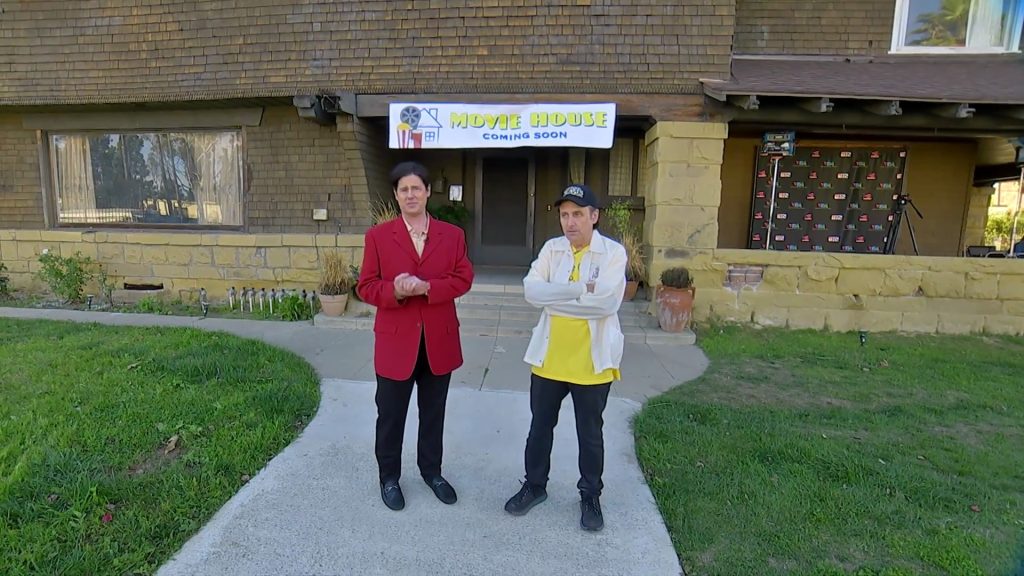
On Cinema’s 12th Oscar Special begins in the front yard of Movie House, which is now locked and the entire group has been evicted. But let’s back up a step: how did we get here?
Spoilers follow!
Season 15 of On Cinema opens with the revelation that Gregg used his settlement funds — which he won from suing The Amato Group following his injuries at last year’s Amatocon — in order to rent the house from the movie The People Under the Stairs and turn it into a movie theater and museum called Movie House. Due to the house’s poor condition he’s hired his friend and W.C. Fields impersonator Mark to perform badly needed repairs… badly.
Tim tried to change his name back from T. Amato to Tim Newman (Newman being his wife Toni’s last name, or really her ex-husband’s last name) but due to a clerical error his name is now Newman Heidecker. He decided to roll with that and is now going by Newman, or “New” for short. Since New and Toni no longer had a place to stay they’re living in one of the Movie House bedrooms and running a massage business there as well.
They don’t seem to have permits for any of these business ventures or building projects, and the police think the massage parlor is a front for prostitution; the latter of which is what got them evicted.
Never one to take no for an answer, New commands Mark to break into the house so they can get the Oscar Special underway.
Now, let’s look at all the crazy things that happened this year at the Oscar Special.
5. Save Movie House with HEI Points
To fight the eviction New has decided to buy Movie House. What’s it worth? Is it even for sale? Who will pay for it?
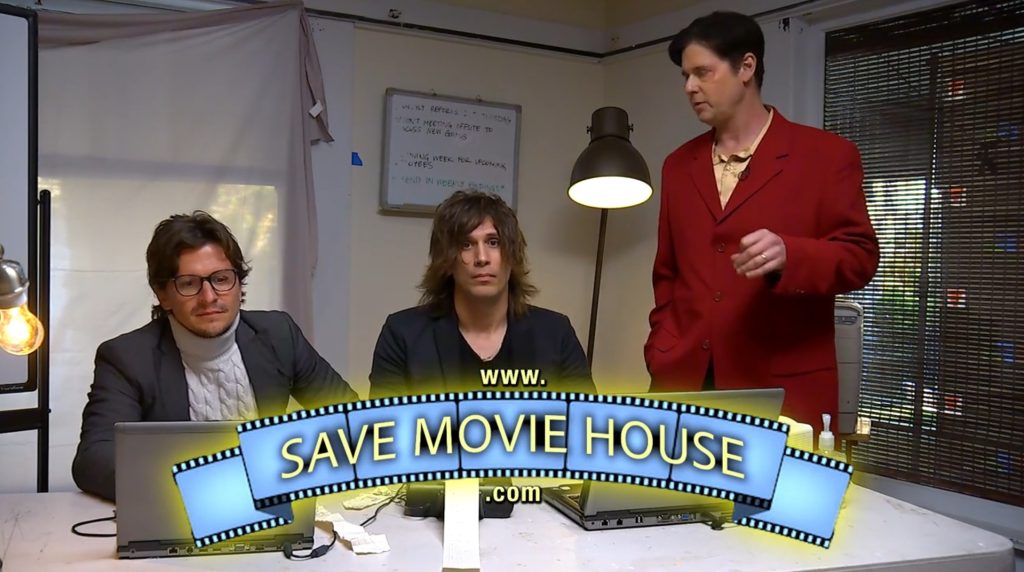
New makes up a rough estimate for what he thinks the house is worth, then solicits donations via the Save Movie House website. He also invites people to donate via his scam currency, HEI Points, and dresses bandmates Manuel and Axiom in preppy clothes and puts them behind computers and a receipt printer to work out the exchange ratio between US dollars and HEI Points. Naturally, they conclude that one dollar equals one HEI Point.
They seem to be under the impression that donations are rolling despite the Save Movie House displaying error messages no matter what you click on.
4. Adult Protective Services checks up on G. Amato
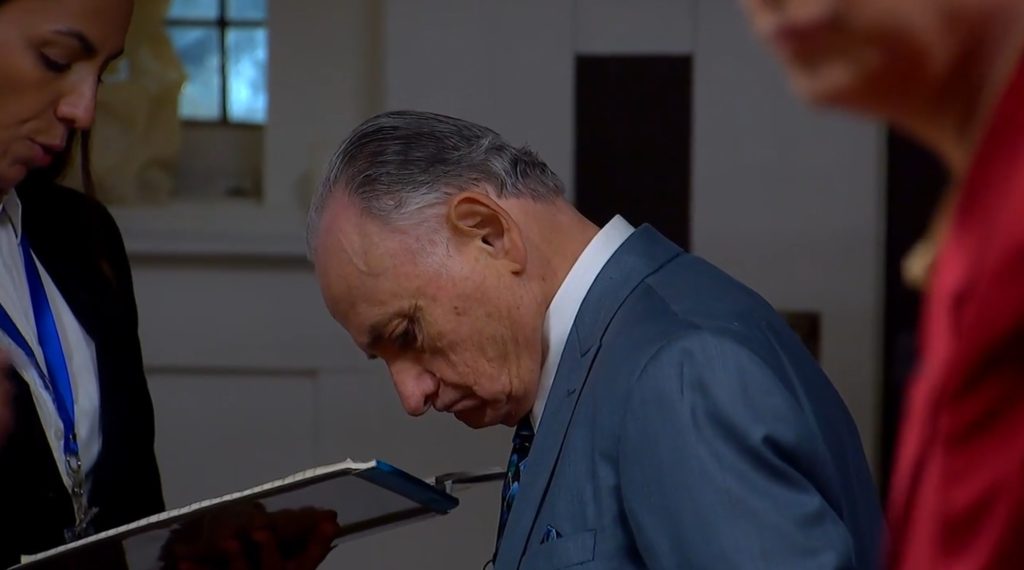
After all this time we still know very little about G. Amato. Is he a wealthy business tycoon? Some type of criminal mobster? Or just a confused old man being taken advantage of by New?
These options are not mutually exclusive of course, but when a representative from Adult Protective Services shows up to question him, it would certainly suggest the latter.
If that weren’t enough Joey P. appears later in the special in an attempt to rescue Mr. Amato, though nothing comes of it except for a screaming match with New. At least nobody got beat up this time.
3. Smart Start Checkout X and the latest in the Chaplin’s Chili saga
Over the years the Oscar Specials have mostly been catered by Chaplin’s Chili and related corporate entities. This year we get the sad news that Chaplin’s went bankrupt after moving to Germany last year, but Gregg scrounged up some expired bags of Chaplin’s Chili to sell at the concession stand.
With nobody to work the concession stand they’ve pivoted to a self-service model including the latest Smart Start Checkout X technology. Though it may have a few technical kinks to work out.
2. Final Conclusion
During the season Gregg has been enthusiastically promoting his movie Zombie 2 2 (the sequel to Zombie 2.) Newman took over the production and has Toni interview the various actors in the movie throughout the special, all of who are cagey about the specifics of the movie. Turns out there’s a reason for that.
New repurposed Gregg’s movie into a conspiracy-theory laden story about the shooting death of Toni’s son Matt. It’s bookended by segments from LaRoux that are spliced together from segments on Xposed. It’s all a transparent effort for New to deflect blame from himself, but somehow leaves him looking much more guilty.
As the movie comes to an end, we hear New’s latest song, “Shoot to Kill,” play over the credits.
1. The end of Movie House
By the end of the season it was clear that Movie House would be a problem, with black mold, bad plumbing, missing fire extinguishers, and Mark tasked to fix it all. As usual, Mark is in way over his head.
During the special Mark is tasked with setting up the movie screening room in the attic. Aside from the pigeons and the comically tiny screen, New is concerned about the support beams in the way of the screen and demands Mark to remove them.
Soon the roof starts creaking and collapses on top of Mark. The exterminator New hired to deal with the house’s rat problem — Mike from Orkin — comes to the rescue by locating Mark with his inspection camera.
Despite bleeding from a cut on his forehead Mark makes it out okay, but the fire department shows up to evacuate the place and condemn the building. New obstinately refuses to leave, yelling at the firefighters and ranting into the camera.
The special ends with the ceiling collapsing on New, with his asscrack visible as he falls over before the camera feed cuts to black.
Honorable mentions
New has been borrowing clothes from Gregg the entire season. Here, he’s clearly wearing the red coat from Gregg’s Willy Wonka costume. Meanwhile we get to see Gregg dressed in a Santa Claus costume to commemorate the anniversary of Tim Allen’s movie, The Santa Clause.
No musical guest this year, unless you include Dekkar’s acapella performance of “Oscar Fever.”
In a rare moment of clarity Joe Estevez becomes concerned with the safety of Movie House and gets out of there.
Gregg debuts his new game show which requires contestants to match the running times to various movies, a shaky concept that runs out of steam almost immediately.
This year’s hallucinatory tribute segment honor’s Hollywood’s Witches and Wizards.
In an interview with People Under the Stairs star Jeremy Roberts, he reveals that most of it was filmed on a sound stage and not at Movie House. Gregg refuses to accept this.
Even through they’ve gotten better at hiding it, you can see Tim on the verge of cracking up throughout this special. Personally I think that sort of unfiltered rawness is part of the appeal of live comedy.
This was one of the shortest seasons of On Cinema in recent years, debuting on Christmas and ending in March. Behind the scenes, both Tim and Gregg were (are?) on tour at the time. Likewise Mark has been busy with TV roles lately, most notably the adaptation of What We Do in the Shadows.
Aside from a minor snafu at the start of the stream, the livestream didn’t suffer any glitches this year. This proved to be both a blessing and a curse as I had to wait for the intermissions to take a bathroom break.
Where will On Cinema go from here? No idea, but I bet it’s not the last we’ve heard from the landlord of Movie House… or whatever’s left of it.
If I’m being honest I lost interest in social media when it started filling up with fascist hate groups, but Bluesky promises to be different — or at least more open source — so I’m crossing my fingers and hoping this works out.
Much has been written about the process of “enshittification,” where existing products actively become worse in the name of making a quick dollar. The most cited examples are Facebook, which used to be a way for college students to connect but is now filled with conspiracies from your drunk uncle, or Google Search which used to be a simple and powerful search engine but is now a scrambled nest of ads and AI gibberish.
I think a good example of enshittification is a bicycle. Let’s say you bought a decent bike. Then one day you wake up and before you can ride it to work, you have to install something called Bicycle+ on your phone that costs $18 a month or the tires won’t stay inflated. Well now you have a bicycle that not only sucks but you can’t even give it away. Worse, you can’t sue the company that made it because the app’s terms and conditions (that you didn’t read) included an arbitration agreement.
Personally I’m not overly optimistic that Bluesky will be any different than Facebook and Twitter, but it is new, and in the world where capitalism slowly strangles the life out of everything, perhaps “new” is all we have left.
Due to time constraints last year I never got to post a “part one” of my movie roundup for 2024. So you’re getting it all in one lump sum. Maybe I’ll do the same thing this year, maybe not — we’ll see how it goes. Regardless I’m posting this a bit late, which for this type of post is right on schedule. For me, anyway.
The Wild Parrots of Telegraph Hill (2003, 20th anniversary reprint)
When this movie first came out I don’t think anyone could have imagined that San Francisco’s most wholesome, feel good movie would be a documentary about an odd man who decided to take care of an invasive species of parrots that formed a flock near his home. But as everyone has their quirks, so do these individual parrots as we soon learn.
This new reprint of the film doesn’t change the story, but it does look significantly better. The color correction is particularly noticeable — the original print had muted, muddy colors that made it look more 1973 than 2003. That’s been fixed, and the film should now be available for streaming in 4K.
Best moment: Opening the window in my apartment and hearing the descendants of the parrots in the movie squawking away.
Rating: 10/10
Dune: Part Two
Let’s see… empires fighting a proxy war in a sandy desert over a valuable resource, framing it as a holy war to influence the locals… *puts down newspaper* Oh sorry, let me put that away and review the new Dune movie.
Part Two begins where the first one left off back in 2021, so I was hoping this would begin with a “last time, on Dune!” recap. Fortunately I still remember roughly where it left off so after a few minutes of trying to remember who was playing which character it all clicked into place.
Much like the last film it sticks largely to the novel, enhancing it with great performances and stunning visual effects. It begins with Paul Atreides shortly after meeting Chani (Zendaya Coleman) and becoming accepted by her and the other Fremen people, taking on the name Muad’Dib.
As for criticisms, the way the Harkonen are presented as cartoonishly evil. This doesn’t fit the subtle worldbuilding at all — to some extent it’s the fault of the source material, but the way they’re portrayed makes it seem like the characters wandered into the wrong movie. And let’s not even talk about the scene where one of them has a pseudo-Hitler moustache.
Also I hate to be this nitpicky but the CGI looks more rushed on this one than the first film. It’s particularly noticeable in the crowd sequences with the worst offender being the obviously fake crowds at the Harkonen colosseum.
It’s already been announced that a third film will be made based on the second novel in the series, Dune Messiah. If you like science fiction with depressing endings this is going to be the trilogy for you.
Best moment: The revelation that the Bene Gesserit aren’t exactly harmless mystical nuns.
Rating: 7/10
Ghostbusters: Frozen Empire
Following the events of Ghostbusters: Afterlife the Spengler family, which now includes Paul Rudd, has moved back to New York City and is working out of the old Ghostbusters firehouse. Unfortunately for Phoebe, child labor laws mean she has to wait before returning to the dangerous job of ghost busting. Also she’s recently made friends with a ghost.
The main plot centers around Phoebe, which doesn’t really work because the screenwriters don’t seem to know how to connect her character with the comedic beats of the movie. The story revolves around a haunted metal ball that looks like it was taken out of an old IBM Selectric typewriter.
The original surviving members return with Ray (Dan Aykroyd) as a dealer of possessed antiques, Winston (Ernie Hudson) as the wealthy new investor in the Ghostbusters, and Venkman (Bill Murray) as Bill Murray making a quick cameo before he presumably left the set with a suitcase full of cash.
Paul Rudd is criminally underused in this movie, I’m not even sure why they brought him back. This movie banks too hard on nostalgia while neglecting the family’s storyline from the last one.
Maybe they’ll make another Ghostbusters movie one day but this version is already running thin on ectoplasm.
Best moment: Whenever Kumail Nanjiani shows up and reminds us this is supposed to be a comedy.
Rating: 3/10
The People’s Joker
Oddball trans comedian Vera Drew has taken the story of Batman vs. the Joker and reinterpreted it as a pseudo-documentary about a little boy growing up to become a famous woman in a world that doesn’t accept her.
The movie will have some appeal for anyone who’s ever felt like an outcast in a world of their own design. It’s certainly not aimed at a general audience, and on that note it gets a lot of mileage by casting Hollywood eccentric David Liebe Hart as Ra’s al Ghul.
Not every joke landed for me personally, though I can easily imagine this playing as a midnight movie double feature.
Best moment: Seeing the wanna-be larger than life Hart on the big screen for the first time.
Rating: 6/10
The Secret Art of Human Flight
Ben was already having a rough time in life before his wife suddenly passed away. Despite his family, friends, and neighbors offering support Ben holds them all at arm’s length and turns to an unusual spiritual guru named “Mealworm” (Paul Raci) who he met online. Though somewhat skeptical, Ben follows Mealworm’s strange advice with the promise that he’ll soon learn how to fly.
The script manages to pull off quite the balancing act, alternating between heavy topics such as death and lighthearted humor, while also leaving Mealworm’s intentions deliberately vague. The casting is also on point, particularly Raci who can pull off the 1960’s spiritual guru type by alternating between wise and creepy in the blink of an eye.
What’s amazing — and ultimately disorienting — about this film is the way it makes you feel your sense of reality slipping away along with Ben’s.
This is the latest film from Bay Area director H.P. Mendoza, who makes a cameo as a guard at a mental institution in this movie (hint: he’s the guy with glasses and a black mohawk.) To me he’ll always be the director of Colma: The Musical.
Best moment: Learning to speak to the pigeons.
Rating: 9/10
Longlegs
It’s the mid 1990’s and a mysterious serial killer known only as “Longlegs” is terrorizing small towns in Oregon. A semi-psychic FBI agent named Lee is tasked with tracking him down, despite her own childhood run-in with the killer.
What makes this movie so effective as a horror film is the fact that we barely see or hear anything from Longlegs himself; and when he does appear, he’s under such heavy makeup that you can barely tell it’s Nicholas Cage.
This is a tough movie to evaluate as it has flashes of brilliance, but other times sticks to the typical horror movie formula. The story revolves around Longlegs delivering creepy life-size dolls to families with girls; I can’t say too much more than that without heading into spoilers.
Longlegs is written and directed by Oz Perkins, aka the son of the actor who played Norman Bates in Psycho. The story is sometimes a little overcomplicated, although the cinematography cleverly directs your focus in ways that moves the plot along. I’d describe the type of horror as more foreboding than traditionally scary.
Best moment: The sinking feeling that being outside can be scarier than being trapped inside.
Rating: 7/10
CatVideoFest 2024
Another year, another chance to see cat videos on the big screen while supporting a local rescue shelter with CatVideoFest.
I’ve been reviewing these for the past few years and have nothing particularly new to say. If the idea of watching silly cat videos in a theater with an audience instead of alone on YouTube sounds appealing, welcome to the club.
I never hesitate to recommend this series as it’s funny and it’s for charity, so mark your calendars for next summer when CatVideoFest is sure to make its return.
Best moment: A human learning what happens when they try to tie their shoes in the presence of a hyperactive kitten.
Rating: 10/10
Only the River Flows
In the mid 90’s in a small town in China where it’s always raining, detective Ma (Yilong Zhu) is tasked with solving a string of unusual murders. The local police chief is under intense pressure to close the case, preferring to blame it all on a local “madman” and calling it a day.
The film is presented largely from Ma’s perspective. As his stress increases we see him begin to break down and seemingly have full-on hallucinations.
I should get this out of the way: I’m not very familiar with Chinese films, let alone independent Chinese films. However, like most indie films it doesn’t adhere as strictly to one genre as mainstream movies tend to do — aside from the police procedural it veers off into drama and lighthearted comedy at times. But I wouldn’t call it a dramedy either. If anything it has more in common with Twin Peaks than Knives Out.
Much of what makes this movie so intriguing is how subtle it can be, from Zhu’s performance to the lingering camera movements that let you know you’re seeing something important without giving away the meaning.
This is one of those rare movies that leaves you thinking long after you’ve left the theater. But it’s also frustrating because you need to go back and watch it again to fully understand it.
Best moment: Ma descending under the stress of his grim job.
Rating: 8/10
Beetlejuice Beetlejuice
Spring was never waiting for us, girl.
I know I’ve said this before but in comedy, plots are often a contrivance on which to hang jokes. The second Beetlejuice movie kind of takes this to the extreme with half a dozen plots that barely come together; but maybe that’s okay because you came for the jokes and not the story.
Most of the original cast is back with the exception of Jeffery Jones, who uh… well we’re better off pretending he’s dead. The movie would have been better if it hadn’t tried to explain this.
While not every aspect of this movie lives up to the original, the overall silliness is still there if somewhat repetitive. The one gag that actually works better this time around is the sandworm since you likely watched the new Dune movies recently.
Does this mean Tim Burton is back? I’m not so sure; even before his career devolved into making bargain bin children’s DVDs he was more of a writer and producer than a director. Which in its own way is perfect for a guy known for creating characters who try to become someone else.
Best moment: “I love a good dream sequence.”
Rating: 5/10
Megalopolis
There are bad movies, and then there are movies so bad they make you question if film should have even been invented.
In New Rome (New York City) an architect named Cesar discovers he has the power to control time. He’s working against the wishes of mayor Cicero to remake the city using a new material called “Megalon.”
The references to history repeating itself suggest the movie has something to say, however unoriginal it may be. Of the main characters the men typically speak like hipsters with English literature degrees and the women are little more than annoying sex objects.
Sometimes the right casting choices can elevate a so-so movie. This movie has an excellent cast but unfortunately it seems nobody told them what this movie was about. I’m not entirely convinced they were even aware the cameras were rolling in some of the scenes. It could potentially work if it were rewritten as a satire instead of taking itself seriously.
I guess there was a time when Francis Ford Coppola’s name meant something, but his best movies (The Godfather, Apocalypse Now) came out before my time. In recent decades his name is more closely associated with wine — he should have stuck with that.
Best moment: Around halfway through when I gave up watching this and decided to go do something else.
Rating: 0/10
¡Casa Bonita Mi Amor!
When the last outpost of Colorado-based Mexican restaurant chain Casa Bonita closes for good, South Park co-creator Trey Parker becomes interested in bringing back the last location of the “Disneyland of Mexican restaurants.” Of course, South Park fans will recognize Casa Bonita from the episode where Cartman hatches an elaborate ruse to get invited to a birthday party at the restaurant.
Unfortunately in the real world the place had fallen on hard times. The kitchen, swimming pool, HVAC, plumbing, electrical, etc. all need to be replaced — and the building itself has structural issues. Parker and his business partner/fellow South Park co-creator Matt Stone initially estimate the budget in the mid-millions of dollars but rapidly blow well past that.
I think most of us can understand the excitement of a passion project. But how many of us have the means or the time to see our passion projects through when we’re in way over our heads?
The documentary is told through interviews, archive footage, and fly-on-the-wall style footage. Most of this works well though some of the business aspects get a little tedious. Still it’s a relatively short film so it never gets overly bogged down on any single subject.
While this could easily have been a thinly-veiled advertisement for the restaurant I didn’t exactly find myself eager to visit. Those with a childhood connection to the place may feel differently.
Best moment: Watching Matt and Trey record hammy voices for some cheap-looking animatronics.
Rating: 8/10
Christmas Eve in Miller’s Point
An enormous and rambunctious extended family gather for Christmas, possibly for the last time at the suburban home where many of them grew up. This movie sidesteps the typical Christmas movie tropes and instead serves as a character-driven drama told through a series of vignettes.
What works about this movie is also what holds it back: the lack of a strong overall story gives the characters plenty of breathing room, while also leaving the audience feeling like they’re missing something as the events barely converge into a greater whole.
Best moment: The quiet awkwardness between a pair of cops played by Michael Cera and Gregg Turkington.
Rating: 4/10
Flow
A black cat is living its best life in a wild forest and the ruins of a human civilization. All is well until a catastrophic flood tears through the landscape, leaving the cat little choice but to join a “family” of other animals living together out of necessity on a small sailboat. The animals include a sleepy capybara, a loud but friendly dog, a treasure-hunting lemur, and a wise bird.
Unlike a Disney film, in this independent Latvian film the animals don’t talk and are (mostly) not anthropomorphized. There isn’t a single line of dialog… unless you count meowing, barking, etc.
The animation style is all 3D computer graphics with environments that alternate between hyper realistic and surreal, with the animals themselves getting cell-shaded animation. The result is a unique style you’re not likely to see anywhere else.
Although the film is intended for all ages I suspect some parts may be scary for the youngest audience members.
Best moment: The cat knocking a bowl off a shelf… on purpose.
Rating: 9/10
UHF (1989)
I’ve seen this movie many times but never in a theater. So when Alamo Drafthouse decided to screen it for its 35th anniversary I jumped on the opportunity right away.
When George (“Weird Al” Yankovic) is tasked with managing a TV station that nobody watches, he accidentally creates top rated independent TV shows due to his imagination and poor decisions. This plot is mostly a thin thread between sketch comedy like “Conan the Librarian,” a Raiders of the Lost Ark parody, and “Gandhi II: No More Mr. Passive Resistance.”
All your favorite comedy bits are there from the commercial for a store called “Spatula City” to the most absurd Rambo parody, or at least the most absurd until Hot Shots! Part Deux came along a few years later.
Like most comedies it’s a bit niche, or a cult classic if you prefer. While some comedies haven’t aged well due to jokes that seem mean-spirited in hindsight, UHF doesn’t have any of that, though its jokes about TV programming in the 80’s and some minor political jokes will probably go over the heads of most Gen Z viewers.
And then there’s the name of the movie. I doubt most people at the time even knew the difference between the two types of broadcast TV channels, the lower numbered VHF (Very High Frequency) vs. the higher numbered UHF (Ultra High Frequency) channels. Back then the independent channels that weren’t part of CBS, NBC, etc. were typically on the UHF band and did tend to show reruns, quirky children’s shows, movies you’d never heard of, etc.
The most surprising aspect of this movie is how little it relies on Weird Al’s music. The only full song of his in the movie is Beverly Hillbillies, his parody of Money For Nothing by Dire Straits. This one doesn’t do much for me — admittedly I don’t like the original song — though I noticed it didn’t get many laughs in the theater. A rare misfire for a musician known for song parodies.
Caveat: It’s impossible to talk about this movie without acknowledging that Michael Richards, aka Kramer from Seinfeld, plays a main character. While this movie came out a couple decades before his racist rant at a comedy club, if you can’t stomach the guy then this may not be the movie for you. Look I’m a white guy so who am I to even weigh in but everyone has a right to their own feelings.
All that said, if you remember the era of 1989 this movie is at times brilliant and hilarious… to me, at least.
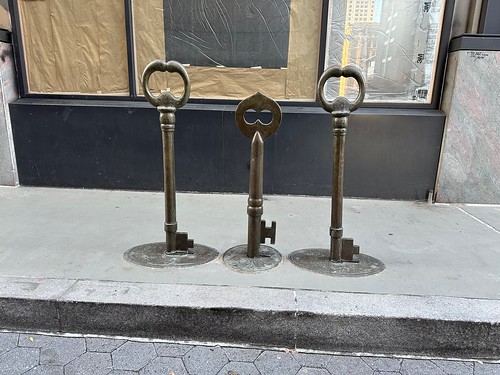
Not far from downtown San Francisco in the SOMA area is an alleyway filled with giant keys and locks sticking out of the ground. Though it may give you the impression that giants walk above us, this is part of an installation called Locks and Keys for Harry Bridges by Bay Area artist Mildred Howard.