Recently I was wandering around with my phone in my hand, as one does, and got to wondering: what if I could use the camera feed and other sensors on the phone to create a procedurally-generated soundtrack?
And just to make things more interesting: I wanted to do it entirely in HTML5 + JavaScript with no backend server at all. In other words, something you could use without an internet connection, provided you’d already downloaded the page.
A few late night tinkering sessions later, and I had a working, somewhat well tuned prototype of my new web app: resonate_glitch.
As I’ve explained in the README:
Generative audio in HTML5. Designed to be run on phones.
resonate_glitch takes in various inputs: the camera feed, mic input, and accelerometer motion data on your phone. Running these parameters through an algorithm, it produces synthesized electronic “music” with a glitchy camera view.
The aim of the project is to create a synthetic synchronicity. Does the music have any meaning? Are you able to affect it in any way? It’s up to the user to experiment and find out.
Note: There is no backend server, everything runs in your web browser. So while the webapp can’t be used for spying, it may cause your phone to overheat.
Have a moment to make some messy, glitchy music? Great! It’s free and open source, try it yourself:
One of the key ideas to emerge from conceptual performance art is tearing down the proscenium. To define the term, the proscenium is the “window” of the stage that the audience is expected to sit behind and passively observe.
An infamous example of this in action is the performance piece Rhythm 0 by Marina Abramović. I’ll let Wikipedia explain:
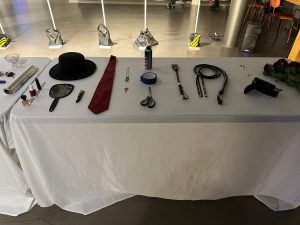
The work involved Abramović standing still while the audience was invited to do to her whatever they wished, using one of 72 objects she had placed on a table. The items were specifically chosen to represent objects of both pleasure and pain. Some items included a rose, a feather, perfume, honey, bread, grapes, wine, scissors, a scalpel, nails, a metal bar, a gun, and a bullet.
There were no separate stages. Abramović and the visitors stood in the same space, making it clear that the latter were part of the work. The purpose of the piece, she said, was to find out, when given the opportunity, how far the public would go: “What is the public about and what are they going to do in this kind of situation?”
Earlier this month I went to see a performance of an “updated” version of this type of performance: Rhythm AI at The Intersection of Art and Technology (stylized as “tiat”) here in San Francisco.
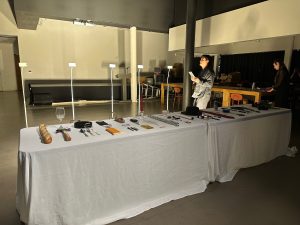
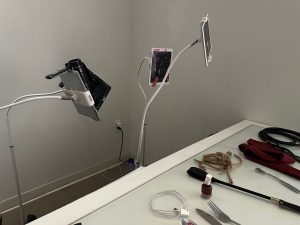
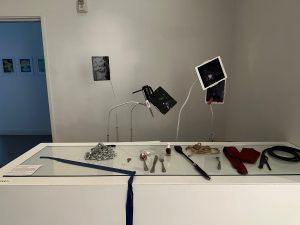
This one-off performance was the work of artists Angelina Almukhametova and Dann Disciglio. Unlike Abramović’s version the replaced the human performer with five iPads. The iPads booted up to display a circular graphic, then in a Siri-like voice explained the instructions — more or less the same prompt Abramović used 50 years ago.
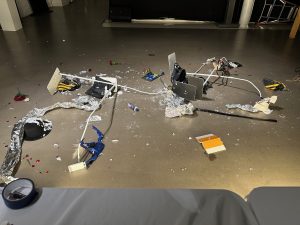
At this point (seen in the video above) the audience waited awkwardly for a few beats, assuming something would happen. Then ,as if on cue, a young rebellious type got up and started breaking things.
(Not pictured: after their turn I grabbed the hat off the table and put it on one of the iPads.)
This back-and-forth dynamic of destruction and creation continued for the next 15 minutes or so, with a small number of audience members participating the most and a few taking things to extremes, risking injury in the process.
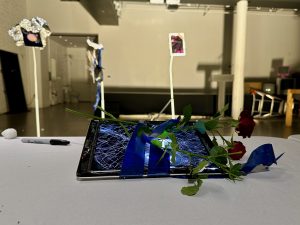
The piece reached a sort of non-ending, with the two artists coming out and themselves destroying the iPads with shaving cream before laying flowers beneath them. Or what was left of the iPads, at any rate.
Personally, to me this was all rather fun; but I tend to be drawn toward art that challenges conventional social norms and interactions. I got the impression that some were disappointed that the iPads didn’t actually do anything, but that’s missing the point in my mind, as the art is the experience, not the presentation. Some members of the audience clapped awkwardly at various points, perhaps uncertain if what they were seeing signified something, or perhaps they were making their own contribution to the piece. Who’s to say?
That said, a part of me secretly wanted the ending to involve the manager from the Apple Store around the corner to come marching in and tell us we were all banned from their store for life after what we’d done. But that would have been a bit over the top.
While Rhythm AI was a one-off event, tiat’s current exhibit, “the epistemologies of slop,” runs through the end of July.
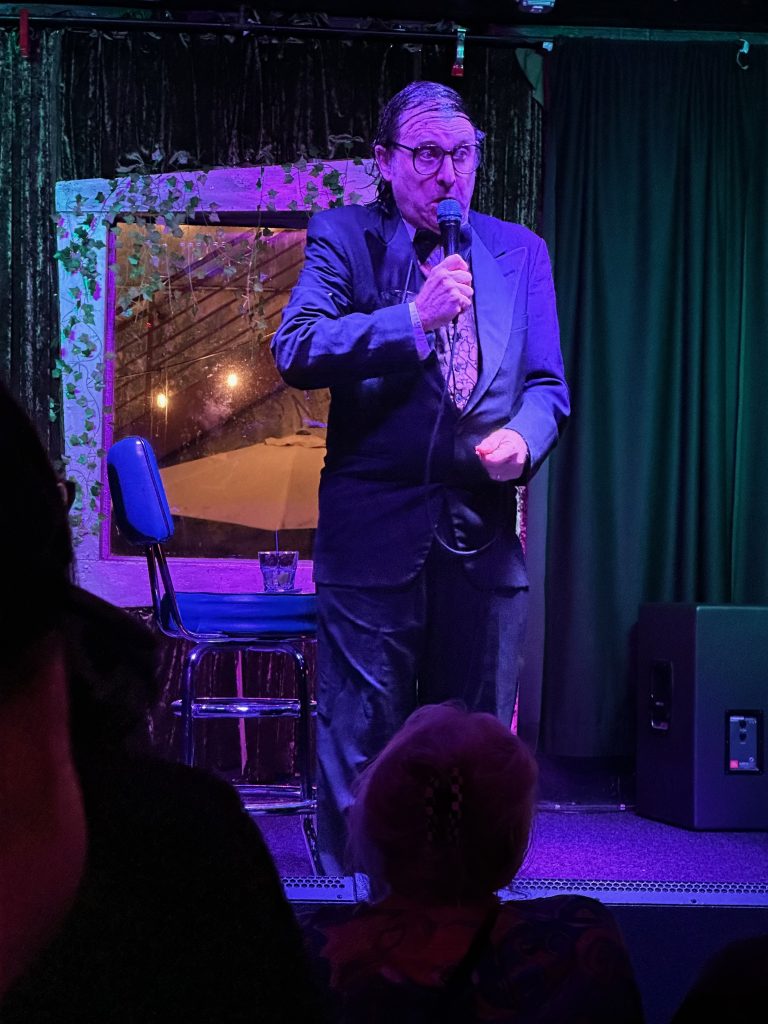
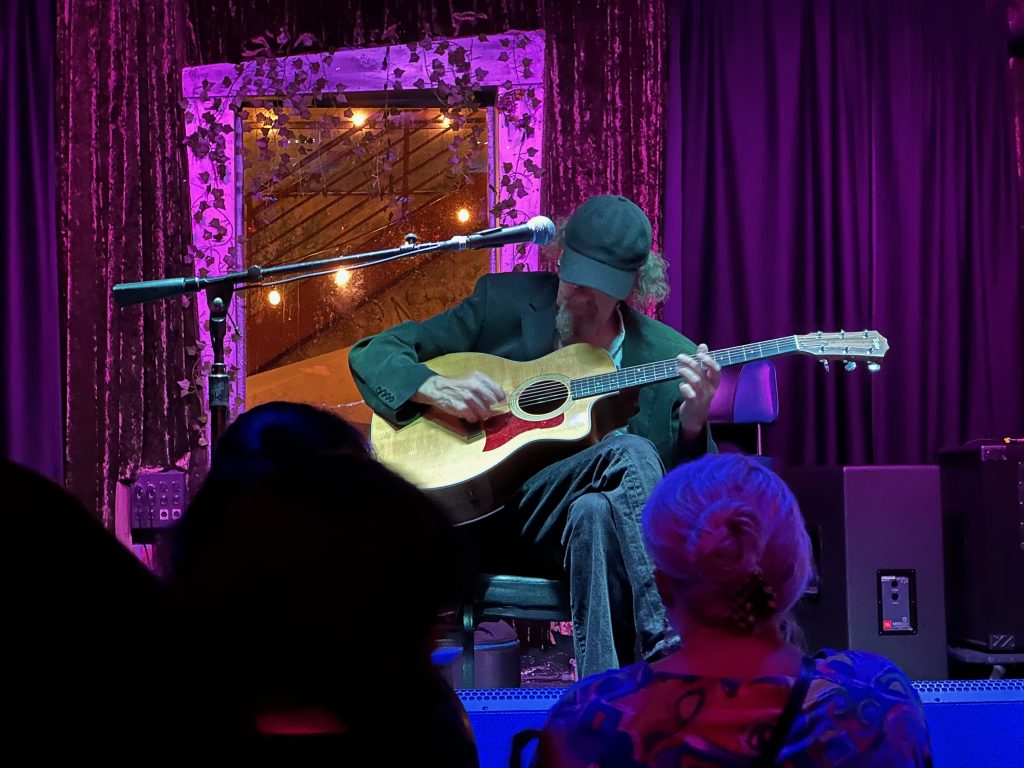
Neil Hamburger was in town for the latest iteration of his comedy act on Saturday, accompanied by opening act Sir Richard Bishop, an experimental guitarist. They performed at the intimate, dive-y, and unfortunately soon-to-be-defunct Bottom of the Hill.
I can’t claim to be familiar with Bishop’s work, but his solo act is somewhat akin to instrumental folk with the speed and precision of surf guitar. Not exactly my cup of tea — yet still mesmerizing to watch.
Neil Hamburger (aka Gregg Turkington) hit the stage with an opening song in his whiny, sad-sack voice, backed by a pre-recorded tape. The show ended in a similar way.
As usual, Neil switches between groan-inducing puns, knock knock jokes, and longwinded stories that serve as a sort of endurance test. The butt of his jokes tends to be washed-up musicians including his favorite targets, KISS and The Red Hot Chili Peppers. This time he had plenty of new material about DJ Diplo, The Foo Fighters, and The Rolling Stones. (“What did Mick Jagger say when he was asked if he’d change the diaper on Keith Richards? ‘Absolutely not, but Ron Wood!’”)
Exactly what makes a good “Neil Hamburger” joke is difficult to pin down. I think the crux of it is the subversion of expectations between the setup and punchline. For example, the punchline to a joke about Mick Jagger deleting DoorDash and Uber Eats from his phone had absolutely nothing to do with either Mick Jagger or The Rolling Stones.
On the 22-Fillmore Muni bus to the show, I found myself among not one but two groups of people heading to the same place. All of us, it turned out, were fans of Turkington from his On Cinema at the Cinema web series. On a day when the biggest event in the Bay Area was a World Cup game in Santa Clara, perhaps it’s no surprise that those going to see a fringe comedian would be such a self-selecting group of people.
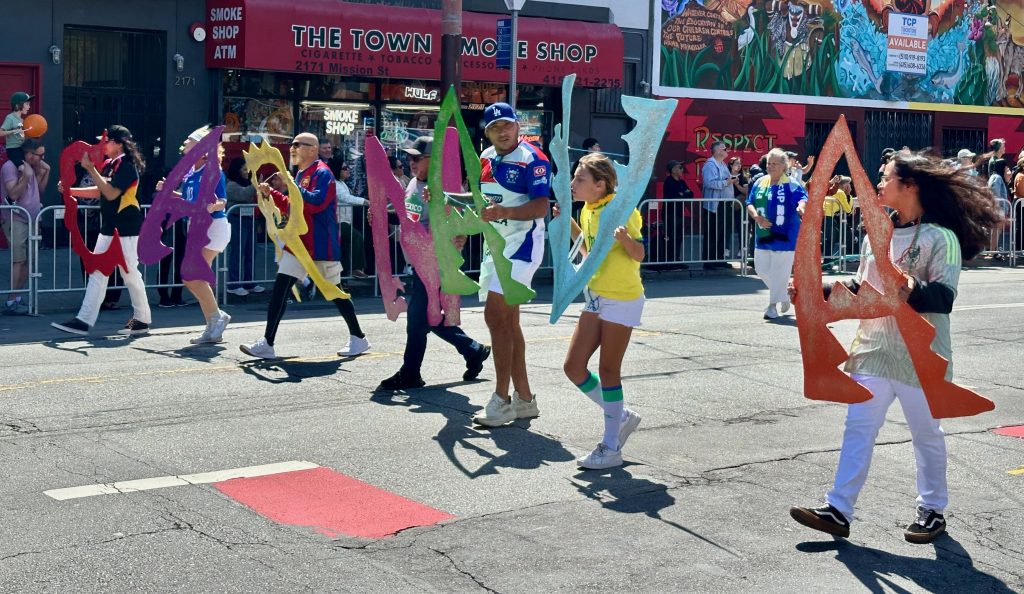
This year’s theme for San Francisco Carnaval was “La Copa del Pueblo,” celebrating soccer, as a sort of prelude to the upcoming World Cup. Needless to say, soccer is a big deal in the Latin American communities that throw the annual Carnaval events and grand parade.
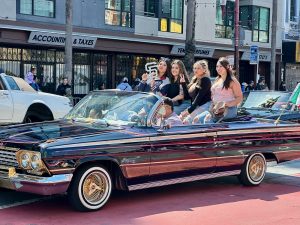
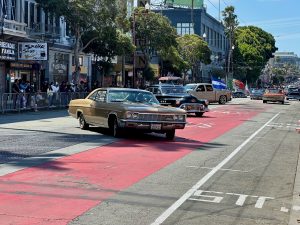
After a week of chilly temperatures it was a warm afternoon for the parade, if somewhat windy. The latter had the effect of knocking some of the inflatable decor around — though thankfully it also blew away the noxious fumes from the lowriders.
As in previous years the crowds were thickest around 24th Street, thinning out considerably towards 16th Street. This year in particular though the parade had to contend with fenced off areas due to street design improvements near 16th.
Perhaps if I’d had more time and stayed longer I could have snagged one of those plastic beaded necklaces. Still, I doubt I’ll ever see anything as memorable as the “stoic cop” interaction from several years back.
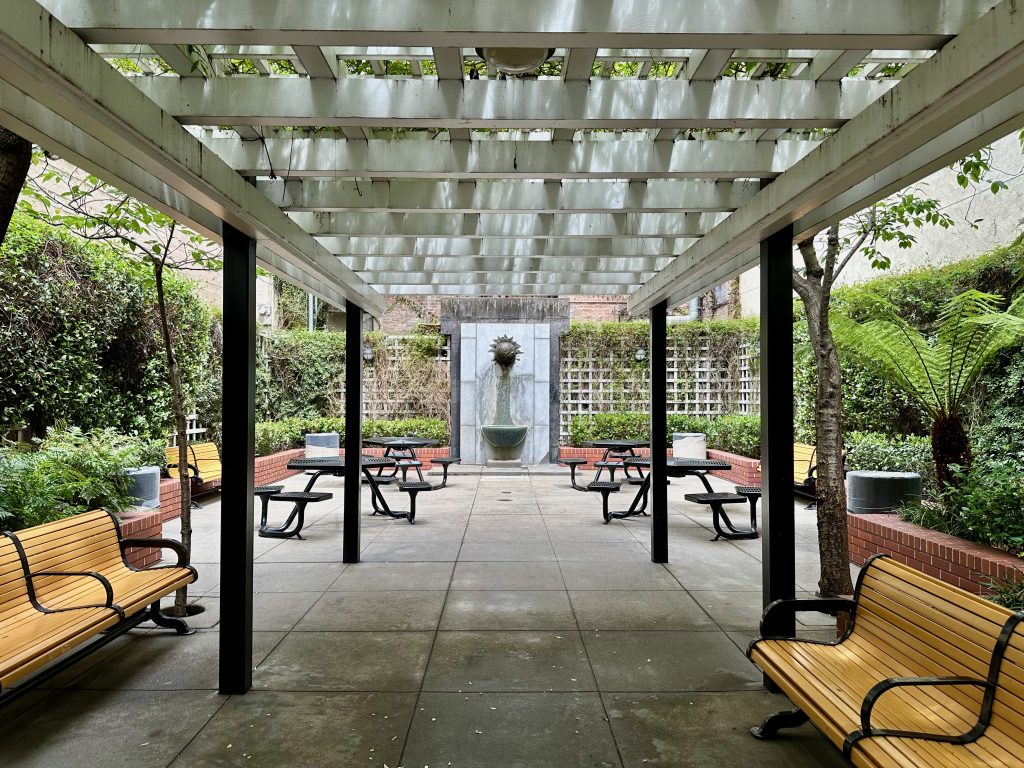
Just off to the side of the 600 block of Commercial Street, a small alley in the Financial District near Jackson Square, is a plaza with seating, gardens, and a water feature.
This privately-owned, public open space (or POPOS) is named Empire Park and features a stone plaque dedicated to Emperor Norton.
Muddying the waters a bit, the park is (or was?) owned by real estate firm The Empire Group, which is not the same company as the nearby Empire Records. It’s unclear if either company is named after the Emperor of the United States himself, Joshua Norton.
Norton at one point lived nearby, though the building itself is long gone.
Mark Twain lived and worked in the same neighborhood during his time in San Francisco — which admittedly was a much smaller city back then. The two almost certainly met, as the character the King in Adventures of Huckleberry Finn is widely acknowledged to be based off of the Emperor.
Empire Park is open to the public most days, though I can’t find an up to date list of hours when it’s unlocked. The park was dedicated to Emperor Norton by Yerba Buena #1 of E Clampsus Vitus.
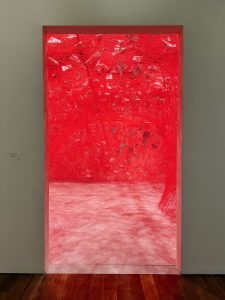
The first piece in her exhibit, Diary, is a passageway through a hall of an intricate mesh of red threads. Pages torn out of a handwritten diary (or so I assume, not being able to read Japanese) are woven into the web.
At the other end of the passage is a room filled with sculptures, both large and small, which are clearly related to Diary; most notably the spider-like outline of a red dress named Two Home Countries that seems to be connecting the installation together in both a physical and metaphorical sense.
If you skipped the exhibit’s intro the relationship to the other sculptures may seem hard to pinpoint — no matter, though. In a small inward facing gallery in the corner the answer can be found, at least for those willing to walk past a sign warning of graphic images. Here the imagery alludes to the artist’s experiences of undergoing cancer treatment.
This personal journey connects the different pieces of the exhibit together — the organic forms, the ruminations on identity, loneliness, and memory — these are the thoughts of someone undergoing intense medical treatment, brought to a larger-than-life scale by an immensely talented artist.
My recommendation: While this exhibit is worth checking out if you’re in the area, it’s a little hard to square with the ever-inflating ticket prices of the Asian Art Museum. Here’s a hot tip: the exhibit has a reduced price on the museum’s free days. Two Home Countries runs through July 20th, but if you get there before June you will also have the chance to view a small exhibit called New Japanese Clay.
This past year was an awkward time for movies. Perhaps it was most acutely captured by a Tron sequel/reboot nobody wanted, staring an actor most people can’t stand.
At the risk of sounding overly negative, it was a “meh” year for movies in general. Still, there were a few gems — I only wish there had been more of them.
Theater of Thought
For many years Warner Herzog has lent his unique philosophy and filmmaking skills to document some of the most peculiar and fascinating subjects, from the earliest human cave paintings to a man who wanted to be accepted by a group of grizzly bears. In this film he turns the subject inward, discovering how we think by interviewing leading neuroscientists and philosophers.
Unlike typical pop psychology, Herzog never bores us with easy answers or wildly optimistic projections about the future. He remains focused on understanding what we’ve learned about how our brains work using the technology available today, even when that leads the overall narrative of the documentary to unresolved questions.
Important note: The film includes brief footage of animal experiments and human brain surgery that some may find upsetting.
Best moment: For me this one’s easy — it’s when the “theater” metaphor extends to a movie theater, which happened to be the very theater where I was watching the film (the Roxie in San Francisco.)
Rating: 9/10
Companion
In the science fiction world there seem to be two types of humanoid robots: hyper-capable androids who save everyone (Star Trek’s Commander Data) and killer sex androids (Dolores in the Westworld TV series.) The problem is that unlike Data, the killer robots look and behave nearly indistinguishable from humans.
This dark comedy is about the latter type of humanoid android, an almost unrealistically good looking robot girlfriend who’s used as an assassin in an ill-conceived scheme.
While the movie gets its share of thrills, kills, and silly moments, it never quite gels into anything beyond the sum of its parts. A big part of the problem is that more effort seems to have gone into developing the robot characters than the human ones, raising the question of what it means to be sentient robot in a world of humans — a point for a more introspective movie, perhaps.
Best moment: “Are you robot-shaming me?”
Rating: 7/10
The Day the Earth Blew Up
Also known as “the Looney Tunes movie that almost didn’t get released in favor of a tax write-off,” this animated movie features Porky Pig and Daffy Duck getting wrapped up in an alien’s dastardly chewing gum plot. Think of the type of cheesy sci-fi B movie you’d see on MST3k but with cartoon characters and you’re on the right track.
An offshoot of Peter Browngardt’s Loony Tunes reboot, The Day the Earth Blew Up at times feels more like an homage to the original cartoon shorts. Which is okay! After all, the best known Warner Brothers cartoons were the postwar era — already a reboot of the originals — when the humor became a little darker and much more violent. Unbelievably, it wasn’t until now that the characters appeared in a full length feature film of their own.
Adding a sibling relationship between Daffy and Porky, as well as a love interest for Porky, are all interesting ideas — but they don’t amount to much. Which is too bad as the sci-fi plot feels quite thin even at a meager 90 minutes.
Frankly, I’m just glad to see Hollywood produce a hand animated movie again after all these years.
Best moment: I don’t think it’s a spoiler to reveal that there’s a “sequel” (Coyote vs. Acme) but the way it’s revealed within the movie is pretty clever and in-line with its self-referential humor.
Rating: 7/10
Black Bag
What if we took a James Bond movie, and bogged it down with a bunch of scenes where people sit around and mumble stilted dialog? That’s basically the pitch for Black Bag: a British spy movie that mixes up the showing vs. telling part of storytelling.
If it weren’t for the gorgeous cinematography there would be nothing worth mentioning about this one. Certainly doesn’t live up to the trailer. It’s easy to see why it flopped in theaters.
Best moment: The moment I realized I was falling victim to the sunk cost fallacy and turned it off before the end.
Rating: 2/10
Secret Mall Apartment
When the forces of gentrification force a group of artists out of their space, what are they to do? For Rhode Island-based artist Michael Townsend and his group of collaborators, they discover a hidden “room” of sorts inside a recently built nearby mall and make it their own living space.
If this sounds familiar it’s because it was all over the news twenty or so years ago when Michael got caught and the space was walled off. But here for the first time it’s presented as a documentary, with interviews from the artists who’d lived there intercut with grainy footage filmed on a cheap camera at the time.
There’s not much to the story itself, it’s presented more as a framework to look at the people involved, occasionally punctuated with some pie-in-the-sky questions like the nature of art itself.
Best moment: Their confession to a like-minded individual working at the mall’s Pottery Barn.
Rating: 8.5/10
The Naked Gun (2025)
Not a remake exactly, this movie is sort of a reboot of the 1988 classic Leslie Nielson police comedy. Liam Neeson plays Frank Drebin Jr., the son of Nielson’s character.
While it could have been a rehash of the first movie, it has a new story about an evil tech company and relies far more on action slapstick for comedy.
What works are the casting choices, particularly Neeson and Pamela Anderson in the (relatively) straight-laced main characters. What doesn’t work as well are the action scenes, which seem geared more to Neeson’s strengths than what works for the movie. There’s so much slapstick in modern action movies anyway that it feels redundant in the context of a comedy movie.
What does work incredibly well here are the wordplay jokes. I just wish they had more of them.
Best moment: “UCLA?” “I see it every day, I live here.”
Rating: 6/10
CatVideoFest 2025
Once again, this year’s collection of cat videos are in theaters to raise money for cat rescue charities. Like every year it’s a mix of various “genres” of cat videos — drama, action, music, etc. — along with a handful of animated shorts.
This year felt a little different with lots of quick TikTok style videos. Whether or not that’s a good thing depends on your taste, or perhaps more importantly your attention span. Either way the movie never gets bogged down with long videos, though I can’t help but to think the videos from TikTok would have been better with the music intact; presumably another victim of copyright issues.
Best moment: A budding film director trying to be the next James Cameron but can only get a blurry video of his cat in a bathtub.
Rating: 10/10
Nobody 2
Everyman asskicker Hutch is having a rut in his marriage, so he takes the family on a vacation to a dilapidated waterpark where he gets in a fight protecting his kids from bullies at an arcade.
There’s something about these movies that seems like it’s a parody of a parody, like it’s making fun of the John Wick movies as a response to Taken. At some point it all starts to blur together a little and you’re left with a violent “good” guy in an elaborate fight with a violent “bad” guy. Or gal, in this case. It’s a well established trope that the villain is the real star of such action movies (The Dark Knight, anyone?) but after so many sequels they all start to blend together.
That said, with its brisk 90 minute runtime, Nobody 2 never overstays its welcome; the humor and boomingly loud music are enough to make it a fun watch.
Best moment: The “Duck Boat” tour guide remaining oblivious to the chaotic fight happening behind him.
Rating: 8/10
Slice of Life: The American Dream. In Former Pizza Huts
What happens when a franchise restaurant chain abandons its once-signature building style? This documentary looks at various businesses and organizations around the US that are in former red-roofed Pizza Hut locations, from a BBQ joint to a church.
The documentary banks heavily on nostalgia for the era when people would go to a Pizza Hut for a table service meal instead of takeout or delivery. Even if you never went to one yourself you’re probably familiar with it through cultural osmosis: the hot pizza from the oven, the salad bar, the soda in red plastic transparent cups, the hanging glass lamps…
Unfortunately the documentary refuses to take off its rose-tinted glasses even for a moment to consider the downsides to the cookie cutter combination of the American landscape, one where you can travel hundreds of miles and somehow feel like you’ve gone nowhere at all.
Which is also the crux of what I don’t like about this film: it doesn’t go anywhere or have anything unique to say.
Best moment: Seeing how a Pizza Hut was repurposed into a church.
Rating: 2/10
Jeffrey Epstein: Bad Pedophile
This short film from The Onion — embedded in its entirety above — parodies a typical true crime show. In this case, we learn what Epstein was up to in between molesting children and allegedly killing himself… like his career in the NBA.
Filled with ridiculous photoshopped images and dense wordplay with the thinnest veneer of authority, Bad Pedophile captures The Onion’s signature style perfectly. While not every joke lands — some of them go by so fast a second viewing is practically mandatory — my only real issue is that it doesn’t punch up enough. Perhaps it’s difficult to find humor in a situation where a sitting US president is withholding information about his criminal best friend, but at this point that’s the most relevant aspect of this news story.
If I’m not mistaken this is The Onion’s second short film, their first was “The Onion’s Future News” which came out twelve years ago. Perhaps now that they’re an independent company again we’ll see more of this sort of thing. One can hope.
Best moment: A “photo” of Bill Gates with a desktop PC that’s somehow wearing lingerie.
Rating: 9/10
The Surfer
An aging, divorced American surfer (Nic Cage) wants to impress his teenage son with surfing lessons and his own childhood beachfront house in Australia. The only problem is, well… everything.
The story centers around feelings of not being accepted. Between the bright blown-out color palette, ethereal soundtrack, and raw action sequences, the film has a peculiar 20th century fever dream aesthetic, which only serves to make it feel more alien.
My issue with this one is that it becomes rather obvious where the story’s heading from about the halfway point. Still, showing your cards too early in such a short movie isn’t a dealbreaker. But the screenplay would have benefited from another draft.
Best moment: When the (unnamed) main character randomly entrusts everything he has of value to a random coffee shop employee.
Rating: 6/10
Outerlands
Cass, a non-binary restaurant staffer and babysitter, lusts after a woman they work with. Their whirlwind romance takes a sudden turn when she leaves her daughter Ari with Cass and disappears. Often intoxicated and short on cash, Cass struggles to be a role model. As the pair bond over video games, Cass quietly confronts their own neglectful childhood and irresponsible present.
The real star of the movie is the young actress who plays Ari, the emotional center of the story who’s far too young to be so jaded by a world in which she’s failed by all the parental figures in her life.
Filmed here in San Francisco, the cinematography largely avoids the glamorous side of the city in favor of the mundane, including the foggy outerlands of the Sunset District from which the movie takes its name. Likewise the interior shots are all in weathered, mostly dimly lit places, suggesting these characters are hanging on by a thread in a city doing the same.
Despite getting off to a strong start, the movie ultimately fizzles out in the end, much like the previous generation of indie films around twenty years ago that kind of went nowhere.
Best moment: Ari being the only one to directly call out Cass on their excessive drinking.
Rating: 6/10
Wake Up Dead Man
There’s been a murder in a small town church and Benoit Blanc (Daniel Craig) shows up to solve the mystery. The church’s priest (Josh Brolin) dies in a side chamber during a break in the middle of a sermon from his mast-shaped bully pulpit. The parishioners seem all too quick to blame the new guy in town, who also happens to be the junior priest.
Like the other movies in the Knives Out franchise your first guess as to who’s behind the murder is probably right. The question is more of how they did it and for what reason, which Blanc has to figure out while stumbling from one dramatic comedy moment to the next.
But where the film itself stumbles a bit is in simply not giving Blanc enough screen time in this one. Sure, we get a few more breadcrumbs about the character’s life and backstory, but he doesn’t appear until a third or so into the movie. We also don’t know exactly why he appeared — in stark contrast to that being a major plot point in the previous film, Glass Onion.
Still, it’s quite funny, particularly how Blanc seems to be on the verge of discovering that he’s ripped straight from the pages of a classic mystery novel.
Best moment: The realization that the “locked door mystery” applies in more ways than one.
Rating: 7.5/10
Zootopia 2
There’s generally three types of sequels: a carbon copy of the first movie (Home Alone 2), a getting-the-gang-back-together for a new adventure (Ghostbusters 2), or a movie that expands on the first one (The Dark Knight.) Zootopia 2 splits the difference; while keeping the same story and characters, it treats the first movie like an origin story while telling a second origin story. Along with a new theme song by Shakira.
Unfortunately this also means the movie kind of falls apart once the action gets underway in the third act, just like the first movie. Be honest: how much of the “exciting” part of that one do you remember? Because you’re in for more of that here, although the reveal of the villain is less of a surprise this time around.
Without saying too much, it also seems to be setting up the possibility of a third movie.
Best moment: A self-aware jab at Disney for making too many sequels.
Rating: 6/10
In Your Dreams
A young family is growing apart. Younger sister Stevie is prone to getting a bit lost in her vivid dreams. After they discover a mysterious book, she and her obnoxious younger brother discover they can not only share a dream — but a lucid dream. Stevie attempts to use this unusual power to bring her family together.
The first third or so of the movie do an excellent job of introducing the characters and the concept. It’s a great concept! Unfortunately like so many other films, it struggles with where to go from there, getting bogged down by repetitive action scenes.
Credit where credit is due: I did think the ending was surprisingly sincere.
This is the first movie from Kuku Studios, a company started by Pixar alumni, and it shows. For better or worse.
Best moment: All the times Stevie notices something’s off and questions her reality.
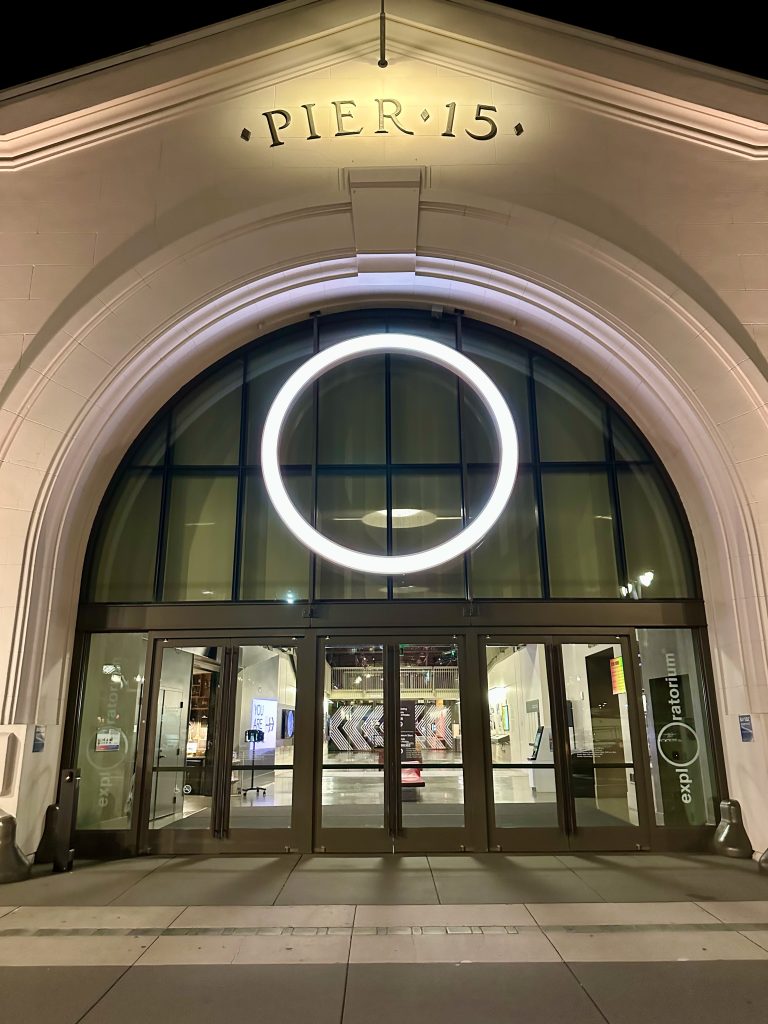
Returning to the Exploratorium for the first time in several years (before the pandemic!) was like coming home to a familiar place. It was long overdue.
One of my favorite aspects of the Exploratorium is the series of exhibits on perception: persistence of vision, optical illusions, differences between sight and motion, etc. To that end, I was happy to find some updates, both new versions of classic exhibits and entirely new ones.
Also: The camera obscura room was open again, which turns out to be an amazing spot to view the Bay Lights at night once your eyes adjust to the extremely dark room.
In the front of the building near the Tactile Dome there’s a collection of exhibits on AI, both old and new. I was a little disappointed that their old chatbot circa 1990 or so wasn’t working. Maybe it was having an off night.
The highlight of this exhibit, as seen in the above video, is a table with various colorful cloths and other objects. A camera points downward at the table, and you’re given the opportunity to select a theme and rearrange the objects. An AI algorithm then “hallucinates” the video feed into a mashup of visuals that morph and jitter along to the theme in real time. As with most of the Exploratorium’s exhibits there’s no clear purpose to it beyond the play factor.
Before taking off for the evening I wandered past some exhibits that were still in the testing phase, including one that let you use a parabolic dish with a microphone to focus in on sounds around the museum. I found myself accidentally spying on a couple nearby, which was awkward. On the opposite end of the new and pristine spectrum there’s a mini exhibit devoted to wear and tear around the museum, including everything from worn out rubber pads to gears with most of the teeth sheared off. Makes me appreciate the amount of work that goes into maintaining the place.
There is one caveat to visiting the museum I have to address: the food. I hate to say it, but it’s been on one steep downhill slide ever since they reopened at the Pier 15 location. Perhaps offering upmarket fast casual dining at a science museum was always going to be a losing battle, though it’s safe to say the Exploratorium could find a better food vendor. There’s a variety of dining options nearby; if you’re looking for something family friendly at a similar price point I’d recommend Gott’s Roadside at the Ferry Building.
These days there are so many allegedly finished products that hide defects behind a thin veneer — whether they be broken video games, AI features with horrible consequences, or batteries that simply catch on fire — there’s something refreshingly honest about the Exploratorium’s approach to science. Yeah, it’s a little messy, but sometimes that’s half the fun.
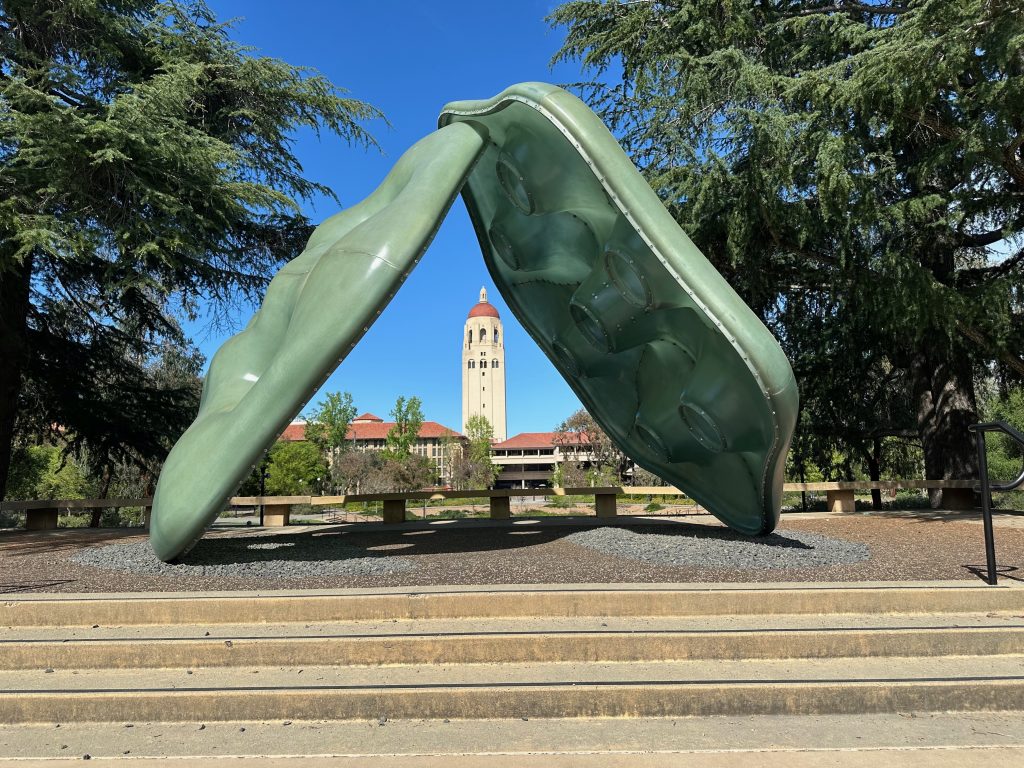
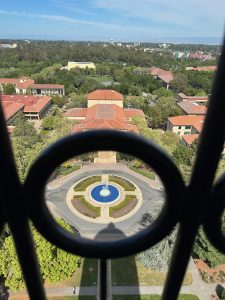
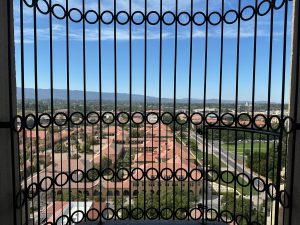
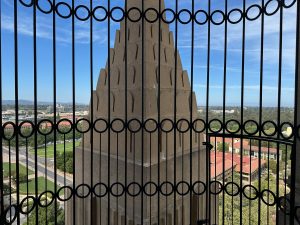
Recently I had a chance to visit Hoover Tower at Stanford University, which I hadn’t been to the top of since I was a kid. From the top of the tower you can see not only the campus below but as the as far as the bay if you squint a little.
The tower’s design is an odd contrast between the styles of Art Deco, which is typically associated with the social realism, vs. the rather stark minimalism present with Hoover Tower. Compared to Coit Tower — which was built around the same time — the lack of colorful murals in the lobby is almost surprising.
Almost. The building’s austere aesthetic matches the history and politics of Herbert Hoover, the conservative US president who only served a single term while the economy crashed and burned around him. This sequence of events ushered in FDR, a pro-labor president and author of the New Deal.
The situation was so bad that makeshift homeless villages came to be known as “Hoovervilles.” Which, come to think of it, is probably why the former president wanted to build something else named after him.
The Hoover Tower was built as a library (which it still houses) and as the visual centerpiece of the Hoover Institution, an oddly out of place conservative think tank
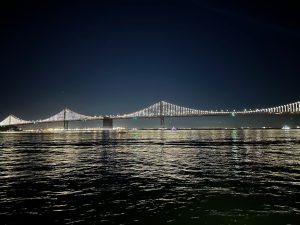
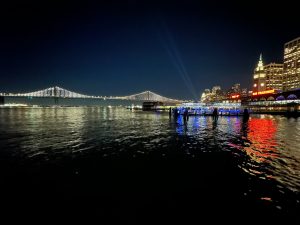
It seems like just yesterday that The Bay Lights first illuminated San Francisco’s Bay Bridge. But it wasn’t yesterday; it was thirteen years ago. Crazy, right?
Since the original temporary installation was first switched on, it was removed and replaced with a more permanent version that lasted about a decade. As of Friday evening the third version was officially lit for the first time.
The unveiling happened to coincide with an unusually hot March day, with temperatures in the low to mid 80 degree range. This brought large crowds to the waterfront for the evening. I took the above photos and videos from along Pier 1, which is just off the beaten path enough to avoid the masses.
With any luck this bigger and brighter version of The Bay Lights should last until 2036, give or take.